Australia
eCommerce Agency for Brands Selling Across Australia
We run eCommerce management and marketing for Australian brands — your own storefront, Amazon, eBay and the marketplace stack — in a market where distance, delivery expectation and a concentrated population shape every decision.
- One team across store, marketplaces, paid media and retention
- Delivery experience treated as a growth channel, not a cost line
- Mobile-first buying behaviour built into merchandising and checkout
- Reporting tied to contribution margin after freight and returns

5
Metro markets
9
Service lines
10
Industry practices
Market opportunity
Concentrated demand, expensive geography
Australia rewards brands that plan around where people actually live and how long parcels actually take. Most of the failures we are asked to fix are logistics problems wearing a marketing costume.
Where the opportunity sits
- Demand concentrated in a handful of metropolitan markets, so targeting is efficient
- High online adoption and comfort with buying from smaller brands
- Less category saturation than the US or UK in several verticals
- Strong mobile commerce behaviour, including social-led discovery
- A marketplace layer that gives new brands early distribution
What makes it hard
- Freight costs and transit times that punish flat national shipping offers
- Regional and remote deliveries that quietly erase margin
- A smaller domestic audience, so acquisition efficiency matters more
- Seasonality inverted relative to northern-hemisphere supply calendars
- Rising expectations set by the largest local and international players
5
Metro markets
Where most demand concentrates
80%+
Mobile sessions
Across most Australian categories
3-4
Channels per brand
Own store plus marketplaces
Nov-Dec
Peak trading
Compressed and decisive
What we run
Our eCommerce services for the Australian market
Nine service lines, each with a specialist page behind it. On this page they are the Australian view; follow any card for the full method.
01
Day-to-day ownership of catalogue, pricing, promotions, inventory signals and channel health across every Australian storefront you run.
02
A single demand plan across search, social, marketplaces and email, budgeted to contribution margin rather than channel silos.
03
Category, collection and product-page visibility for high-intent Australian search, plus the technical work that keeps large catalogues indexable.
04
Paid search, shopping, social and retail media managed against blended acquisition cost across states and seasons.
05
Research-led testing on the pages that carry your revenue: PDP, cart, checkout, delivery messaging and returns policy.
06
Lifecycle flows, segmentation and win-back built to raise repeat rate and lifetime value, not just open rate.
07
Theme, template and integration work on Shopify, WooCommerce, BigCommerce and Adobe Commerce, including speed and accessibility.
08
Product photography direction, listing imagery, A+ content, video and ad creative built for Australian shopper expectations.
09
Listing quality, buy-box health, retail media and account operations across the marketplaces Australians actually shop.
Every service is delivered by the same team that owns your number, so nothing falls between store, ads and lifecycle.
Buying journey
How Australian shoppers actually decide
Delivery time is checked earlier here than in most markets, and it is checked on a phone.
Discover
Research
Compare
Purchase
Delivery
Experience
Repeat

DISCOVER
Discovery is overwhelmingly mobile
Social feeds, creators and search seed demand, almost entirely on phones. We plan discovery on incrementality rather than last-click credit, and we design for the small screen first.

RESEARCH & COMPARE
Delivery time enters the comparison early
Australian shoppers check whether a parcel arrives in days or weeks before they check the price twice. Being specific about transit time by state converts better than a vague national promise.

DELIVERY & REPEAT
The delivery decides the second order
Tracking quality, packaging and a painless return are what turn a first purchase into a habit. We treat post-purchase as a retention channel with its own targets.
Channels
Where Australian revenue is won
Most Australian brands run three layers at once. We keep them coordinated so they compound instead of cannibalising each other.
Your own storefront
The margin channel and the place your brand story lives. We manage the platform, merchandising and checkout experience, and the development work behind it.
Marketplaces Australians shop
Where a growing share of discovery and comparison happens. Listing quality, buy-box health, retail media and account operations, run as an owned channel.
Acquisition and retention
The demand engine that feeds both. Search, paid media, creative and lifecycle planned together against one blended acquisition target.
The Australian market
Growing across the Australian eCommerce market
Six things a plan built for Australia has to get right that a generic international plan will not.

GEOGRAPHIC DISTRIBUTION
Demand is metro-concentrated
A large majority of orders come from a handful of metropolitan areas. Targeting, delivery promises and inventory placement should all reflect that rather than spreading evenly across the continent.
DISTANCE
Regional and remote costs real money
Serving regional and remote addresses on the same flat rate as metro is the most common margin leak we find. We build zone logic that keeps the promise honest and the economics intact.

MOBILE COMMERCE
Mobile is the primary store
Most Australian sessions and a majority of orders happen on a phone. Merchandising, imagery, filters and checkout are designed for that screen first, not adapted to it afterwards.

CHANNEL MIX
DTC versus marketplaces
Marketplaces buy you reach and speed; your own store buys you margin and data. Which should lead depends on your category and your freight profile, and we model both before recommending one.

EXPECTATIONS
Customer expectations keep rising
Free shipping thresholds, tracking quality and return ease are all compared against the largest players. We set a promise you can hold rather than one you have to apologise for.

ACQUISITION ECONOMICS
Acquisition economics in a smaller pool
A smaller audience means frequency builds faster and creative fatigues sooner. Budget is set against contribution margin and refreshed on a creative cadence rather than left to run.
Acquisition
How we build demand in a smaller market
Demand becomes traffic, traffic becomes customers, customers become revenue. Each stage has its own owner and its own number.
Demand
Traffic
Customer
Revenue
Category and product visibility in Australian search, with local intent handled properly rather than inheriting US or UK rankings. The compounding channel that lowers blended acquisition cost.
Search, shopping, social and retail media managed to a blended target, with budget concentrated where freight cost and demand both work in your favour.
In a smaller audience pool creative fatigues faster, so production cadence matters as much as production quality. We iterate against performance data rather than taste.
Conversion and retention
Turning traffic into repeat revenue
With a smaller audience, the second and third orders matter more than the first. Margin is protected on the conversion and retention side of the equation.
Acquire
Convert
Retain
Grow
Research-led testing across PDP, cart and checkout, with delivery timing and returns messaging treated as first-class conversion levers rather than legal small print.
Lifecycle flows, segmentation, replenishment timing and win-back campaigns built around real purchase intervals for your category.
Cohort reporting that shows what a customer is worth by channel, state and first product — so acquisition budget can be set with confidence instead of guesswork.
Delivery experience
Shipping and delivery as a growth channel
In Australia the delivery experience does more for repeat purchase than almost any campaign. It is worth designing deliberately rather than inheriting from whichever carrier was cheapest at signup.
THE PROMISE
Setting a promise you can hold
Carrier mix, dispatch cut-offs, zone-based thresholds and honest transit windows by state. An accurate three-to-five day promise outperforms an optimistic two-day one that fails a third of the time.
- Zone and weight-based thresholds instead of one flat national rate
- Realistic transit windows quoted per state and per postcode band
- Dispatch cut-offs and carrier mix matched to your order profile
- Express options priced so they carry their own cost
THE EXPERIENCE
What happens after dispatch
Tracking communication, packaging quality and how simple a return is are all measurable, all fixable, and all strongly correlated with whether a customer orders again.
- Proactive tracking updates rather than a bare carrier link
- Packaging that survives long transit without inflating freight weight
- Return routing that does not consume the margin on the original order
- Post-delivery flows that convert a good experience into a second order
We do not run your warehouse. We do make sure the promise on the website matches what the warehouse can actually do.
Industries
Categories we help grow in Australia
Category economics differ more than channel tactics do. Each of these has a dedicated practice page with the full method.

Not listed? The framework still applies — see all industries we work with.
Market expansion
Entering Australia, or growing out of it
Cross-border works in both directions. The constraint is almost always freight economics and transit time rather than demand.
INBOUND
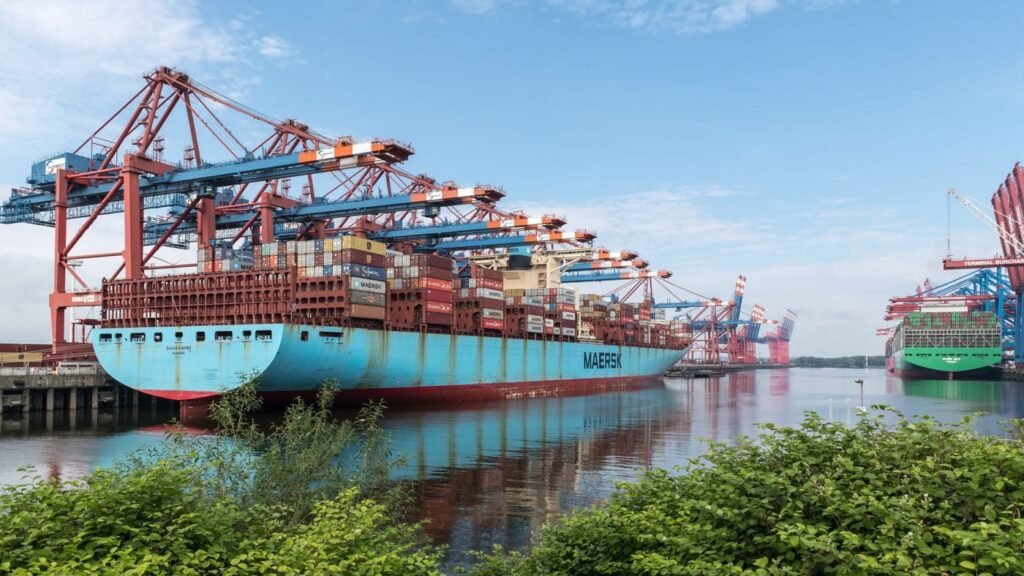
Entering the Australian market
For overseas brands, Australia is an English-language market with high online adoption and less category saturation than the US or UK. The friction is freight: whether stock sits locally decides whether the promise is competitive.
- Australian 3PL versus shipping cross-border per order
- GST treatment and duty-inclusive pricing at checkout
- Marketplace account structure alongside a local storefront

OUTBOUND
Growing beyond Australia
For Australian brands with proven domestic demand, the next market should be chosen on landed cost and channel fit rather than on familiarity. We size the opportunity before you commit inventory.
- The United States and United Kingdom where language and category fit are strong
- New Zealand and Asia Pacific where freight lanes are shorter
- The Gulf and wider Europe where marketplaces can lead the entry
How we work
Our growth framework
The same six steps on every engagement, so you always know what is happening and why.
01
Understand
We start with your margin structure after freight and returns, your inventory reality and your current channel mix — not with a tactic list.
02
Audit
A full read of store, listings, paid accounts, lifecycle and analytics. We report what is broken, what is wasted and what is already working better than you think.
03
Strategize
A prioritised plan with owners, budgets and expected outcomes, sequenced so the fastest margin recovery happens first.
04
Execute
One team delivering across store, marketplaces, media, creative and lifecycle, working to a shared calendar rather than separate channel plans.
05
Optimize
Continuous testing and reallocation against contribution margin, with a weekly rhythm and a monthly deep review.
06
Scale
New markets, new channels and new categories added only once the Australian core is profitable and the operation can absorb them.
You get the same senior team through all six steps — no handover to a junior pod after the pitch.
Why us
Why Australian brands choose Dazzle Commerce
Three things clients tell us are different about working with us.
One accountable team
Store, marketplaces, media, creative and lifecycle under a single plan and a single owner.
- No finger-pointing between agencies
- One roadmap and one reporting pack
- Senior people on the account, not just the pitch
Delivery treated as strategy
We plan freight, thresholds and the post-purchase experience as growth levers, not as an operations afterthought.
- Zone logic instead of one flat national rate
- Transit windows quoted honestly by state
- Post-delivery flows that earn the second order
Margin-first reporting
We report contribution margin after freight and returns, not just revenue and ROAS.
- Freight and returns inside the numbers
- Cohort value by channel, state and first product
- Budget decisions defended with evidence
Ready to compare us properly? Start with the case studies and what engagements cost.
Results
What this looks like in practice
Three engagements with an Australian dimension, and the constraint that was actually holding growth back.
Kitchenary
Home and kitchen brand, DTC plus marketplace
MARKET CHALLENGE
One flat free-shipping threshold applied to every postcode. Regional and remote orders on bulky products were losing money on exactly the range the ads pushed hardest.
STRATEGY
Rebuilt thresholds by zone and product weight, quoted realistic transit windows per state, then re-weighted paid spend toward the metro corridors where freight cost supported the promise.
SERVICES
eCommerce management, PPC, CRO, marketplace management.
RESULT
Contribution margin recovered without losing volume, and delivery complaints fell once the promise matched what the carrier could do.
+38%
Contribution margin
-21%
Blended CAC
+12%
Repeat rate
NutriBlend
Supplements and wellness, subscription-led
MARKET CHALLENGE
Acquisition cost rising faster than lifetime value, with churn concentrated in the second and third months of the subscription.
STRATEGY
Reworked onboarding and replenishment timing around actual consumption intervals, then rebuilt win-back around the real churn window.
SERVICES
Email and retention marketing, CRO, creative, eCommerce marketing.
RESULT
Longer subscriber life meant acquisition budget could be raised rather than cut, and paid media stopped being the only growth lever.
+29%
Subscriber LTV
-34%
Month-3 churn
+18%
Revenue per email
Vac & Vacuums
Consumer appliances, marketplace-heavy
MARKET CHALLENGE
Listings competing against the brand’s own resellers, with buy-box share falling and returns creeping up on one core model.
STRATEGY
Cleaned up catalogue and variation structure, enforced pricing policy, and rewrote listing content around the specification questions driving returns.
SERVICES
Marketplace management, creative and content, eCommerce SEO.
RESULT
Buy-box share and organic marketplace rank both recovered, and the return rate on the problem model fell within a quarter.
+44%
Buy-box share
-17%
Return rate
+26%
Marketplace revenue
Market insights
What we are seeing in Australia right now
Short reads from the accounts we run, updated as the market moves.

CONVERSION
Quoting three to five days and hitting it outperforms quoting two and missing. Accuracy converts, and it removes the support load that a missed promise creates.

RETENTION
The window right after a parcel lands is the highest-intent moment a customer will give you. Most brands spend it sending a review request and nothing else.

STRATEGY
Frequency builds quickly against an audience this size. Production cadence ends up mattering more than production budget.
FAQs
Questions Australian brands ask us
How should we handle shipping across such a large country?
Zone and weight-based thresholds rather than one national rule, with transit windows quoted honestly per state. A flat national free-shipping offer is the most common margin leak we find on Australian stores.
Should we lead with our own store or with marketplaces?
It depends on your category and freight profile. Marketplaces buy reach and speed; your own store buys margin and data. We model both before recommending one — see marketplace management.
Do you work with overseas brands entering Australia?
Yes. The first decision is whether stock sits locally, because that single choice usually decides whether your delivery promise is competitive. Everything else follows from it.
Is Amazon worth it in Australia?
Which platforms do you support?
Shopify, WooCommerce, BigCommerce, Adobe Commerce, Wix and Squarespace on the store side, and the major marketplaces on the channel side. Each has its own platform page with the detail.
What size of brand do you usually work with?
Most of our Australian clients are established brands doing meaningful volume who have outgrown a single-channel setup. We are a poor fit for pre-launch brands with no demand signal yet.
How is the work priced?
Retainer-based, scoped to the channels and service lines in play, with a clear list of what is included. Indicative ranges are on the pricing page.
How quickly do results show up?
Merchandising, listing and conversion fixes usually move numbers within weeks. Earned search visibility and retention gains build over quarters. We set expectations per workstream rather than promising one blended timeline.
Ready to grow properly in Australia?
Tell us what you sell, which channels you run and what your freight profile looks like. We will come back with an honest read on what is fixable first — and what is not worth doing at all.