
eCommerce Customer Retention & Email Marketing Guide
Acquisition buys a first order. Retention decides whether that order was worth buying. This guide covers what a retained customer is actually worth, how to measure retention without flattering yourself, the five flows that carry most of the revenue, and why sending more is almost never the answer.
CHAPTERS
8 chapters
READING TIME
38 min read
LAST UPDATED
19 September 2026
LEVEL
Intermediate

The second order costs almost nothing to win and is worth the same as the first. That gap funds everything else.
EXECUTIVE SUMMARY
What this guide argues, in five points
Retention is usually treated as an email problem, which is why it usually stalls. Email is the delivery mechanism; retention is a product, service and cadence problem that email reports on. The stores that retain well are rarely the ones sending most.
- Raising repeat rate raises the CAC you can afford in every acquisition channel at once. That is the commercial case, and it is bigger than the flow revenue.
- Measure by cohort. Aggregate repeat rate rises on its own as the customer base ages, which is how flat performance gets reported as growth.
- Five flows carry most of the revenue. Built properly, they out-earn a year of campaign sends on almost every store we have taken over.
- Open rate is not a metric any more. Mail privacy protection inflates it to the point of meaninglessness — use clicks, orders and contribution.
- Sending more is the most common response to a retention problem and almost never the fix. Cadence should follow the purchase cycle of the product, not the calendar.
The eight chapters below are the detail behind those five points, in the order we work through them when we take retention on for a store.
- Contents
Eight chapters
Read it in order the first time. After that, the chapter index is the useful part.
01
Retention sets the price you can afford to pay for acquisition. That is the commercial case, and it is bigger than the flow revenue.
5 min
02
Aggregate repeat rate rises as a base ages. Cohorts are the only view that tells you whether anything changed.
5 min
03
Five segments, each implying a different action, beats forty nobody maintains and one that ignores everybody.
4 min
04
Flows arrive when the customer is already thinking about you. Five matter; the rest are refinements.
6 min
05
Frequency is the wrong argument. The right one is whether each send has a reason the recipient would recognise.
4 min
06
Invisible until it is catastrophic. Filtered mail still reports as delivered, so the dashboard will not warn you.
5 min
07
Delivery, service and product cadence do more for repeat rate than any sequence. Email reports on retention; it does not create it.
5 min
08
The channel intercepts customers who were already returning. Cohort contribution is the headline; attributed revenue is not.
4 min
- Before you start
Who this guide is for
Written for the people who own repeat revenue, whether or not they build the emails.
Founders and heads of eCommerce
You want to know whether retention is worth investing in before acquisition, and what a realistic repeat rate looks like in your category.
In-house email and CRM managers
You are being asked to send more and want the numbers to argue for sending better instead.
Operations and customer service leads
Half of what decides repeat rate happens after the order is placed, which is your half.
NOT WRITTEN FOR
People looking for subject line formulas. Nothing in this guide depends on a trick — and if delivery is unreliable or the product disappoints, no sequence rescues it.
CHAPTERS
CHAPTER 01
5 min
What a retained customer is actually worth
Retention sets the price you can afford to pay for acquisition. That is the commercial case, and it is bigger than the flow revenue.
The commercial case for retention is not that returning customers are cheaper. It is that the price you can afford to pay for a new customer is set by what that customer goes on to be worth — so retention work quietly changes which acquisition channels are viable.
Contribution per order
£26
After goods, fees, fulfilment and returns
Break-even CAC at 1.0 orders
£26
First purchase only
Break-even CAC at 1.9 orders
£49
A realistic twelve-month figure on many stores
Break-even CAC at 2.6 orders
£68
What good retention buys you in the ad auction
The right-hand column is what a competitor with better retention can outbid you by, on the same product at the same margin.
KEY TAKEAWAY
Retention is an acquisition strategy. Every additional order per customer raises the ceiling on what you can pay for the first one, which is why retention work often unlocks paid media that previously looked unaffordable.
Which retention lever applies to you
Categories retain differently, and applying the wrong pattern produces unsubscribes rather than orders. Before building anything, place your product on this table.
Product type
Natural repeat behaviour
Where the retention work goes
Consumable
Predictable, weeks to months
Replenishment timing and subscription
Wardrobe or collectable
Irregular, driven by newness
Product cadence, taste segmentation, early access
Durable, long cycle
Years, sometimes never
Accessories, consumables, service, referral
Gifting
Annual and occasion-driven
Date-based reminders and recipient memory
B2B or trade
Contract and stock driven
Account management, reordering, credit terms
A durable-goods store run on consumable tactics sends weekly emails to people who will not buy again for three years, and calls the resulting unsubscribes a list problem.
The row you are in decides everything downstream: the flows worth building, the cadence that is tolerable, and whether subscription is a genuine option or a distraction.
CHAPTER 02
5 min
Measuring retention by cohort, not average
Aggregate repeat rate rises as a base ages. Cohorts are the only view that tells you whether anything changed.
Aggregate repeat rate is one of the most misleading numbers in eCommerce. It rises on its own as a customer base ages, because older cohorts have had longer to buy again. A store whose retention is deteriorating can report an improving repeat rate for a year.

Cohorts by acquisition month are the only view that answers whether anything you changed worked.
Build the cohort view once
1
Group customers by the month of their first order. That cohort is fixed forever; nothing moves between rows.
2
Track orders per customer at 30, 90, 180 and 365 days. Same elapsed time for every cohort, so they are comparable.
3
Add contribution, not revenue. A cohort that returns for discounted clearance is not the cohort you want more of.
4
Split by acquisition channel. Channels deliver materially different customers, and the cheapest CAC frequently delivers the worst cohort.
KEY TAKEAWAY
If your best-performing acquisition channel on CAC is your worst on 365-day cohort contribution, you are buying revenue that leaves. That comparison changes budget decisions more than any creative test.
The four numbers worth holding
- Repeat rate at 90 and 365 days, by cohort. The headline, and the input to everything in chapter one.
- Time to second order. The median gap tells you when your flows should be arriving; most stores send far too late.
- Orders per customer in year one, which sets affordable CAC directly.
- Cohort contribution by acquisition month, the single view that shows whether the customers you bought were worth it.
Two of these can be built in a spreadsheet from an order export in an afternoon. None of them requires a platform upgrade, and having them changes the conversation from send frequency to customer quality.
CHAPTER 03
4 min
Segmentation that earns its keep
Five segments, each implying a different action, beats forty nobody maintains and one that ignores everybody.
Segmentation is where most retention programmes go wrong in one of two directions: everybody gets the same email, or the list is cut into forty segments nobody can maintain. The useful middle is a small number of segments that each imply a different action.
Five segments that earn their keep
Segment
Who is in it
What changes
Engaged buyers
Bought and opened or clicked recently
Full cadence, new products first, no discount needed
One-time buyers
One order, inside the normal repeat window
Second-order flow; the highest-value group on most stores
Lapsing
Past the median repeat gap, still engaged
Winback before they stop opening, not after
Engaged non-buyers
On the list, clicking, never purchased
Objection handling rather than more product emails
Dormant
No engagement for a long window
Sunset sequence, then suppression — for deliverability, not tidiness
Five segments, each with a different job. Adding a sixth should require naming what would be sent to it that is not sent to any of these.
KEY TAKEAWAY
The one-time buyer segment is usually the largest pool of recoverable value on the list and the one most often treated identically to everybody else.
Segmenting on behaviour, not demographics
- Recency, frequency and value are still the backbone, and they need no data you do not already have.
- Category bought is often more predictive than anything about the person. Somebody who bought for a child shops differently from somebody who bought for themselves.
- Discount dependency. Customers who have only ever bought on promotion are a different business with a different margin, and should stop receiving full-price launches.
- Engagement recency, which is now a clicks-and-opens blend rather than opens alone — see chapter six.
CHAPTER 04
6 min
The five flows that carry the revenue
Flows arrive when the customer is already thinking about you. Five matter; the rest are refinements.
Automated flows carry most of the revenue in a well-run retention programme, because they arrive when the customer is already thinking about you rather than when the calendar says so. Five of them matter. The rest are refinements, and none of them should be built before these five work.
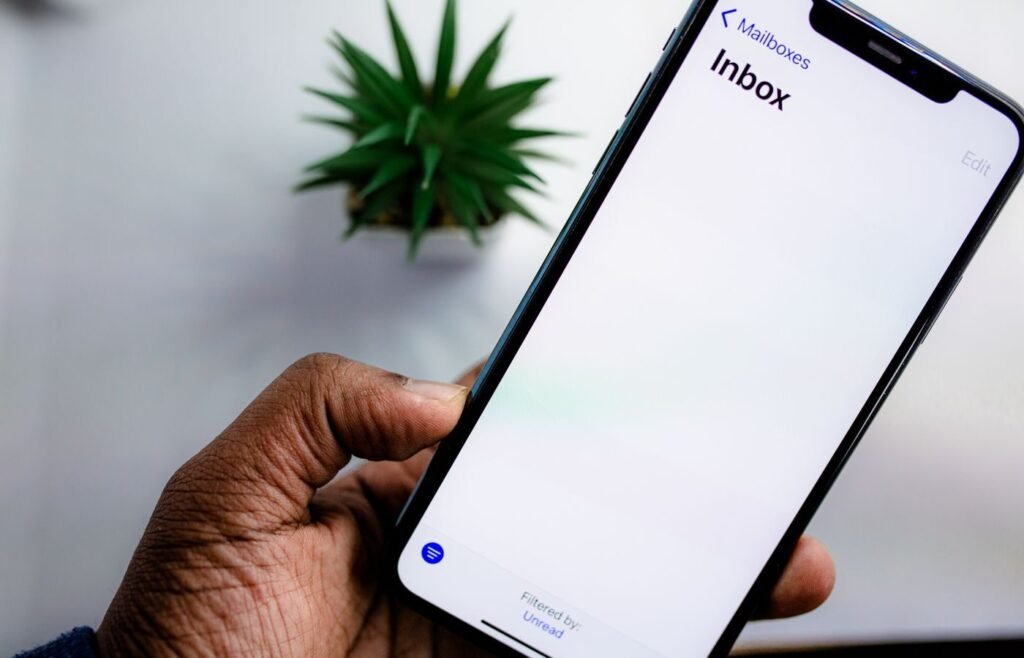
A flow is read on a phone, between other things. Write for that, not for a desktop preview.
The five, and what each is for
Flow
Job
Common failure
Welcome
Establish who you are before the first purchase decision
One discount email, then silence for six weeks
Browse and cart abandonment
Recover intent that already existed
Three identical reminders that never address the objection
Post-purchase
Reduce anxiety, then set up the second order
Transactional only, then straight back to campaigns
Replenishment or second order
Arrive when the product is running out
Sent on a fixed schedule rather than on consumption
Winback
Recover lapsing customers while they still open
Triggered at twelve months, long after attention has gone
Built properly, these five out-earn a year of campaign sends on almost every store we have taken over.
KEY TAKEAWAY
Time the second-order flow to the median gap between first and second purchase on your own data. A generic thirty-day delay is wrong for most catalogues in one direction or the other.
Writing a flow that works
- Answer the objection rather than repeating the offer. Cart abandonment is usually about delivery cost, sizing or trust — address those, in that order.
- Do not lead with a discount. Discounting the first reminder trains customers to abandon deliberately, and it is very hard to untrain.
- Use post-purchase for reassurance first. Where it is, when it arrives, how to use it. Selling before it has been delivered reads as indifference.
- Keep flows short and let them end. A sequence that never stops is a sequence people unsubscribe from.
- Suppress across flows. Somebody in an abandonment sequence should not also receive the campaign send that day.
Our article on abandoned cart flow structure covers the sequence, the timing and the objection order in detail.
CHAPTER 05
4 min
Campaigns, cadence and the calendar
Frequency is the wrong argument. The right one is whether each send has a reason the recipient would recognise.
Campaigns are the part everybody argues about, usually in terms of frequency. Frequency is the wrong variable. What decides whether a campaign programme works is whether each send has a reason to exist that the recipient would recognise.
Reasons a send can justify itself
- Something is genuinely new — a product, a restock, a collaboration. The most reliable reason, and it is a merchandising output rather than a marketing one.
- Something is useful — how to choose, how to care for it, what people get wrong. This is where the content calendar earns its place.
- Something is ending — a real deadline, honestly stated. Manufactured urgency works once and costs trust permanently.
- Something is relevant to this segment specifically, which is the whole point of chapter three.
KEY TAKEAWAY
If a send does not fit one of those four, the answer is not to send it with a better subject line. Sending more is the most common response to a retention problem and almost never the fix.
Cadence by product cycle
Tolerable frequency is set by how often somebody could plausibly buy from you. A coffee subscription can write weekly; a mattress retailer writing weekly is training its list to ignore it, and the unsubscribe rate will arrive about six weeks later.
1
Start from the median repeat gap you measured in chapter two.
2
Set a baseline cadence that fits inside it comfortably — not one that fills it.
3
Vary by segment. Engaged buyers can take more; lapsing customers need fewer and better.
4
Watch unsubscribe and spam complaint rates per send, not monthly averages. The send that caused the damage is visible for about a day.
Our eCommerce content calendar template plans campaign sends alongside the rest of the content programme, so cadence is a decision rather than a scramble.
CHAPTER 06
5 min
Deliverability and list health
Invisible until it is catastrophic. Filtered mail still reports as delivered, so the dashboard will not warn you.
Deliverability is the part of email marketing that is invisible until it is catastrophic. A programme can look healthy for months while an increasing share of its sends land in spam, and the reporting will not tell you, because messages that are filtered still count as delivered.
The hygiene that actually matters
- Authenticate properly. SPF, DKIM and a DMARC policy on the sending domain. The major inbox providers now require this of bulk senders, and it is a one-off piece of work.
- Send from a subdomain of your real domain, not a shared platform domain. Reputation you build belongs to you.
- Keep complaint rate low. The practical ceiling is very low, and a single bad send to a dormant list can take months to recover from.
- Make unsubscribing easy. A person who cannot find the unsubscribe link marks you as spam instead, which is far more damaging.
- Suppress the dormant. Sending to people who never open is the fastest way to teach a mailbox provider that your mail is unwanted.
KEY TAKEAWAY
List size is not an asset. A large list with falling engagement is a deliverability problem being stored up, and it will surface on your most important send of the year.
Why open rate stopped being a metric
Mail privacy protection pre-fetches tracking pixels for a large share of recipients, which registers as an open whether or not anybody looked. Open rate is now inflated, uneven between audiences, and unusable for judging a send — though it remains weakly useful as a relative engagement signal inside one audience over time.
- Judge sends on clicks, orders and contribution. Those are still real.
- Build engagement segments on a blend, weighting clicks and purchases far above opens.
- Never report open rate as performance to anybody making a budget decision. It flatters the programme and hides the trend.
EXPERT VIEW
“The single most common thing we inherit is a large list, a flattering open rate, and a sender reputation that has been degrading for a year. The fix is nearly always sending less, to fewer people, more deliberately.”
Dazzle Commerce · Retention team
CHAPTER 07
5 min
Retention beyond the inbox
Delivery, service and product cadence do more for repeat rate than any sequence. Email reports on retention; it does not create it.
Email is the reporting layer of retention, not the whole of it. The things that most reliably make somebody buy again are the product arriving as promised, the problem being solved when it goes wrong, and a reason to come back that exists independently of a message.
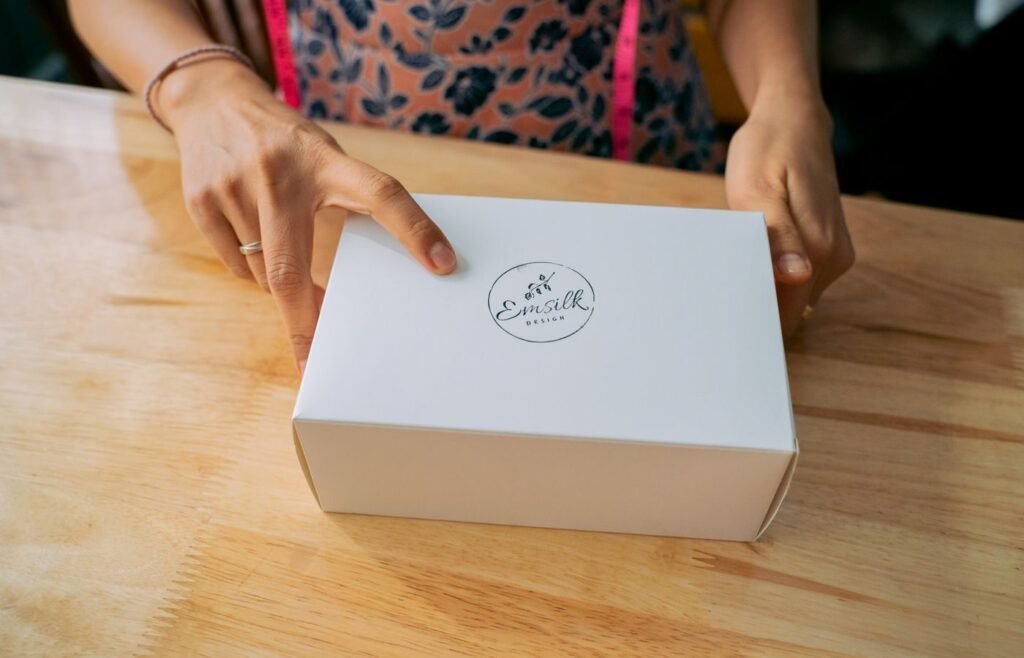
The strongest retention asset on most stores is the order that arrived correctly.
The levers that sit outside the inbox
- Delivery reliability. A late first order undoes every flow you could write. Retention work on a store with a fulfilment problem is decoration.
- Service recovery. Customers who had a problem solved well retain better than customers who never had one. That is worth staffing for.
- Product cadence. In taste-led categories, having something new worth returning for is the retention strategy. No flow substitutes for it.
- Packaging and the unboxing moment, where it is proportionate to the category. Cheap, memorable, and it makes the second email land differently.
SMS, used sparingly
SMS has far higher attention and far lower tolerance. It works for time-critical, high-value messages — delivery updates, a genuine deadline, a restock somebody asked to be told about — and it burns permission fast when used as a second email channel. Collect consent separately, say what it is for, and send a fraction as often.
Subscription and loyalty, honestly
- Subscription belongs to predictable consumption. Forcing it onto an irregular category produces churn and support load rather than recurring revenue.
- A loyalty scheme is a margin decision. Model what it costs on customers who would have returned anyway before modelling what it earns on those who would not.
- Referral is usually the better first move. It is cheaper, it selects for people who already like you, and it improves acquisition rather than discounting retention.
CHAPTER 08
4 min
Reporting retention honestly
The channel intercepts customers who were already returning. Cohort contribution is the headline; attributed revenue is not.
Retention reporting overclaims more consistently than any other discipline, because the channel intercepts customers who were already coming back. A flow email sent to somebody who had already decided to reorder will be credited with the order, and the platform will present that as incremental revenue.
Attribute conservatively, on purpose
- Use a short attribution window on flows. A long window sweeps up orders the flow had nothing to do with.
- Report flow revenue separately from campaign revenue. They behave differently and should be judged differently.
- Hold out a small control where the platform allows it. Ten per cent of a replenishment audience left alone for a quarter answers the incrementality question directly.
- Never let email revenue and paid media revenue be summed. The same order appears in both, and the total will exceed what the business actually took.
KEY TAKEAWAY
The honest headline for a retention programme is cohort contribution, not channel-attributed revenue. If repeat rate by cohort is not moving, the programme is redistributing credit rather than creating orders.
The reporting set worth building
View
Question it answers
Cadence
Repeat rate by cohort
Are newer customers retaining better than older ones?
Monthly
Cohort contribution by acquisition channel
Which channel buys customers worth having?
Quarterly
Flow revenue with a short window
Are the five flows earning their build cost?
Monthly
List health: engaged share, complaints, unsubscribes
Is the programme borrowing from next year?
Per send, reviewed monthly
Four views. If a retention dashboard has thirty widgets and none of these, it is reporting activity.
Give retention changes a full purchase cycle before judging them. On a ninety-day repeat gap, a flow rebuilt in January is not readable until April, and reading it in February produces the wrong decision with confidence.
- Worked examples
Three decisions, before and after
The three arguments that come up on almost every retention programme we take over.
MEASUREMENT
An improving repeat rate that was not
Before
Aggregate repeat rate up from 21% to 26% year on year, reported as a win
After
Cohort view showed 90-day repeat rate falling in every cohort for four quarters
The aggregate rose because the customer base aged. The cohort view showed newer customers retaining worse, which was a product and channel problem, not an email one.
CADENCE
Sending more into a long purchase cycle
Before
Weekly campaigns to the full list on a catalogue with a nine-month repeat gap
After
Monthly to engaged buyers, quarterly to everyone else, flows rebuilt
Frequency was training the list to ignore the sender. Total email revenue rose while total sends fell by roughly two thirds.
ATTRIBUTION
A replenishment flow taking credit
Before
Flow credited with a large share of repeat revenue on a long attribution window
After
Ten per cent holdout run for a quarter; incremental share measured, not assumed
Much of the credited revenue was customers reordering on their own schedule. The flow still earned its place — at a fraction of the number that had been reported.
Anonymised from programmes we run. The shapes recur; the numbers will not match yours exactly.
- Take these with you
Three checklists
Written to be worked through rather than read. Nothing here needs a tool you do not already have.
Measure first
An afternoon with an order export.
- Customers grouped into cohorts by first-order month
- Repeat rate at 90 and 365 days calculated per cohort
- Median time to second order known
- Orders per customer in year one calculated
- Cohort contribution split by acquisition channel
- Break-even CAC recalculated using real repeat behaviour
The five flows
Build in this order; stop when they work.
- Welcome sequence that explains who you are, not just a code
- Cart and browse abandonment that answers the objection
- Post-purchase reassurance before any further selling
- Second-order or replenishment timed to your median gap
- Winback triggered while the customer still opens
- Cross-flow suppression so nobody receives two at once
List health, monthly
Fifteen minutes that protects the whole programme.
- SPF, DKIM and DMARC in place on the sending subdomain
- Complaint rate reviewed per send, not per month
- Unsubscribe link obvious and working in every template
- Dormant contacts in a sunset sequence or suppressed
- Engagement segments built on clicks and orders, not opens
- No report going to management with open rate as the headline
Copy these into your own tracker. There is no download form and no email wall.
- Frameworks
Two frameworks worth keeping
The two decisions that get reargued every quarter, written down so they stop being reargued.
FRAMEWORK ONE
The cadence table
Tolerable frequency is set by how often somebody could plausibly buy from you, not by what a benchmark deck says. Find your median repeat gap in chapter two, then read across.
Median repeat gap
Engaged buyers
Everyone else
Under 45 days
Weekly
Fortnightly
45 to 120 days
Fortnightly
Monthly
4 to 9 months
Monthly
Quarterly
Over 9 months
Quarterly, with a real reason
Twice a year
Flows sit outside this table. They are triggered by behaviour and are not part of the frequency budget.
If a send cannot justify itself as new, useful, ending or segment-specific, the cadence is not the problem.
FRAMEWORK TWO
The retention priority order
When a retention programme needs everything doing, the order matters more than the list. Each step assumes the one above it has cleared.
1
Fulfilment and service. If orders arrive late or problems go unresolved, nothing below this line will work. This is not a marketing task and it is still step one.
2
Measurement. Cohorts built, median repeat gap known, contribution rather than revenue. Without it you cannot tell a win from an ageing base.
3
Deliverability. Authentication, suppression, complaint rate. Everything downstream depends on arriving in an inbox.
4
The five flows. Built in order, timed to your own data, each answering an objection rather than repeating an offer.
5
Segmentation. Five segments that each imply a different action.
6
Campaign cadence. Set from the cadence table, varied by segment, reviewed per send.
7
Everything else. SMS, loyalty, subscription, referral — each judged on margin, none of them a substitute for the six above.
Programmes that start at step seven produce a loyalty scheme on a store that delivers late.
- In summary
Key takeaways
Eight sentences you could hand to somebody who is not going to read the guide.
1
Retention is an acquisition strategy: every additional order per customer raises the CAC you can afford in every channel at once.
2
Measure by cohort. Aggregate repeat rate rises as a customer base ages, which is how flat performance gets reported as growth.
3
Place your product on the repeat-behaviour table first. Consumable tactics applied to durables produce unsubscribes, not orders.
4
Five flows carry most of the revenue, and the second-order flow should be timed to your own median gap rather than a default thirty days.
5
Answer the objection instead of repeating the offer, and do not lead an abandonment sequence with a discount.
6
Open rate is not a metric. Judge sends on clicks, orders and contribution, and build engagement segments the same way.
7
A large list with falling engagement is a deliverability problem being stored up. Suppressing the dormant protects everything else.
8
Report cohort contribution, not channel-attributed revenue. If repeat rate by cohort is flat, the programme is redistributing credit.
If you want a single first action: export your orders and calculate the median gap between first and second purchase. Most flows are timed wrongly because nobody has.
- Go deeper
Where this work sits in the practice
Three services that pick up the chapters above.
Cohort reporting, the five flows, segmentation and cadence, measured on repeat rate rather than sends.
The fulfilment, catalogue and service work chapter seven puts ahead of any sequence.
The on-site half: a returning customer still has to be able to buy on a phone in under a minute.
- Keep reading
Related guides
The rest of the guide library, all published in full — plus the customer lifetime value and cohort LTV calculators, which do this guide’s arithmetic two different ways.

Complete guide · 37 min
Purchase frequency is one of five terms. This is the guide to the other four and the cash behind them.

Complete guide · 37 min
Where retention sits in the wider mix, and why it changes what you can pay for a customer.

Complete guide · 37 min
The on-site half: a returning customer still has to get through checkout.
Want this run on your store rather than read about it?
Our retention engagements open by rebuilding cohort reporting, then the five flows, before anybody argues about send frequency.