
International eCommerce Expansion Guide
Selling into another country is a landed cost, tax and fulfilment decision long before it is a marketing one. This guide covers how to tell whether you are ready, how to choose a market on evidence rather than enthusiasm, what a parcel actually costs to deliver across a border, and what localisation means once translation is finished.
CHAPTERS
8 chapters
READING TIME
38 min read
LAST UPDATED
19 September 2026
LEVEL
Intermediate
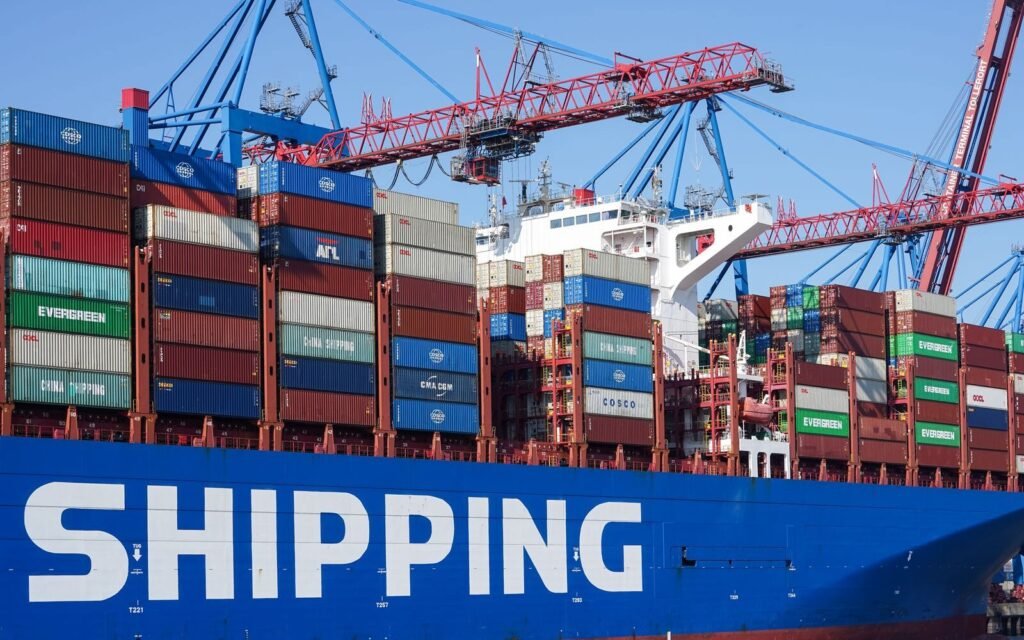
Most failed expansions were decided in a spreadsheet nobody opened, months before the first order shipped.
EXECUTIVE SUMMARY
What this guide argues, in five points
International expansion is usually presented as a marketing opportunity and is actually an operations and finance decision. The countries that work are rarely the ones with the largest market; they are the ones where a parcel can be delivered, taxed and returned at a cost your margin can absorb.
- Expansion multiplies every existing weakness. If your domestic operation is fragile, a second country makes the same problem more expensive in a currency you do not report in.
- Choose a market on landed cost and fulfilment feasibility first, market size second. Most shortlists are built in the opposite order.
- Duty, import VAT and the de minimis threshold change the arithmetic more than shipping does, and they are the part almost nobody models before launch.
- Pick one operating model per market and commit. Half-cross-border, half-local is where margin and accountability both disappear.
- Localisation is not translation. Payment methods, delivery expectations, sizing conventions and returns law decide conversion far more than the words do.
The eight chapters below are the detail behind those five points, in the order we work through them when a store asks us about a new market.
- Contents
Eight chapters
Read it in order the first time. After that, the chapter index is the useful part.
01
Expansion multiplies whatever is already fragile. Five tests, answered honestly, before a market is even chosen.
5 min
02
Six criteria, scored the same way for every candidate. The largest market is rarely the right first one.
5 min
03
Six lines, not one. Get this wrong and you lose the order at the door rather than a little margin.
6 min
04
Four models, not a spectrum. Pick the cheapest that can prove the market, and set the trigger for moving up in advance.
5 min
05
One of the few genuinely hard-to-reverse decisions. Settle it before the first market launches.
5 min
06
Payment methods, delivery expectations, sizing conventions and returns law decide conversion far more than the words do.
4 min
07
Where the plan meets a parcel. Returns are a line in the business case, not an afterthought.
4 min
08
Four views and a stop rule agreed before launch. Closing a market cleanly is a legitimate outcome.
4 min
- Before you start
Who this guide is for
Written for the people who will own a new market and its numbers.
Founders and heads of eCommerce
You are deciding whether a second market is the right next move, and want the landed cost answer before the strategy conversation.
Operations and supply chain leads
Chapters three, four and seven are your half, and they decide whether the rest of the plan survives.
Marketing and merchandising teams
Localisation is not a translation project, and chapter six is the list of things that actually move conversion.
NOT WRITTEN FOR
People looking for a country recommendation. There is not one here, because the right market depends on your product’s weight, margin, regulation and return rate. Chapter two is how to work it out for yourself.
CHAPTER 01
5 min
Whether you are ready to expand at all
Expansion multiplies whatever is already fragile. Five tests, answered honestly, before a market is even chosen.
Expansion is the most common answer to a growth question and frequently the wrong one. A second market does not diversify risk in the way founders expect; it multiplies whatever is already fragile, in a currency you do not report in and a language your support team does not speak.
Five readiness tests
Test
Ready when
Not ready when
Domestic margin
Contribution has headroom for higher delivery and returns cost
The home market only works at full price with free shipping
Operational stability
Dispatch, stock accuracy and support are under control
You are already missing cut-offs or running out of stock
Catalogue readiness
Weights, dimensions, materials and commodity codes exist
Half the range has no dimensions, let alone a tariff code
Cash
You can fund stock, duty and a slow first year
Growth is already consuming all available working capital
Ownership
One named person owns the market and its numbers
It is somebody’s third priority
Fail two and the launch will consume a year. Fail on cash alone and it does not matter how well everything else scores.
KEY TAKEAWAY
The cheapest expansion test is the one you can stop. Before committing to a market, decide what evidence after six months would make you close it — and write that down while everybody is still optimistic.
Signals that a market is asking for you
- Unfulfilled demand you already see. Traffic, enquiries or orders from a country you do not serve properly is the strongest single signal available, and it is free.
- Search demand for your category in the local language, not just in English. English-language volume from a non-English market usually overstates the opportunity.
- A distribution route that already exists — a marketplace you already sell on operating there, or a 3PL you already use with a facility in the region.
- A product that travels. High value per kilogram, low return rate, no regulatory complexity. Bulky, heavy or regulated products make every later chapter harder.
If you are not yet sure growth is the constraint at all, our twelve-point growth assessment names it before you commit a market budget.
CHAPTER 02
5 min
Choosing the market on evidence
Six criteria, scored the same way for every candidate. The largest market is rarely the right first one.
Market selection is where enthusiasm does the most damage. The largest market is rarely the right first market, because size says nothing about whether you can deliver into it profitably, be paid in it, or be found in it at a cost you can afford.

Score markets against the same criteria. A shortlist built on instinct is a shortlist built on the founder’s holidays.
Score every candidate on the same six criteria
Criterion
What you are testing
Where to find it
Demand
Search and marketplace volume for your category, in local language
Search tools, marketplace search, your own analytics
Deliverability
Cost and transit time to the customer, not to the border
Carrier and 3PL quotes against real parcel dimensions
Duty and tax
Rate, thresholds and who is liable
Tariff schedules and a tax adviser, not a blog post
Payment fit
Whether your checkout offers what people actually use
Local payment method share, by country
Competition
Who already owns the shelf and on what basis
Local search results and the main marketplace
Operational load
Language support, returns address, regulation
Your own team’s honest answer
Score each one, weight them for your business, and rank. The exercise takes a day and routinely reorders the shortlist.
KEY TAKEAWAY
Deliverability and duty should be weighted above market size. A smaller market you can serve profitably beats a larger one where every parcel loses money.
Test before you commit
1
Open on a marketplace already operating in the market, where one exists. It is the cheapest way to see real demand and real return rates.
2
Or run paid traffic to your existing site with honest delivery terms, and measure what happens at the point where the shipping cost appears.
3
Read the returns, not just the orders. Sizing, expectations and product fit all show up there first.
4
Give the test a defined window and a stop rule, agreed before it starts.
Our international expansion template holds the scoring model and the contribution maths from the next chapter in one working file.
CHAPTER 03
6 min
Landed cost, duty and tax
Six lines, not one. Get this wrong and you lose the order at the door rather than a little margin.
Landed cost is what it actually costs to put a product in a customer’s hands in another country, including everything the customer is charged on the way. Get it wrong and you do not lose a little margin; you lose the order at the door, when a carrier asks for a duty payment nobody mentioned at checkout.
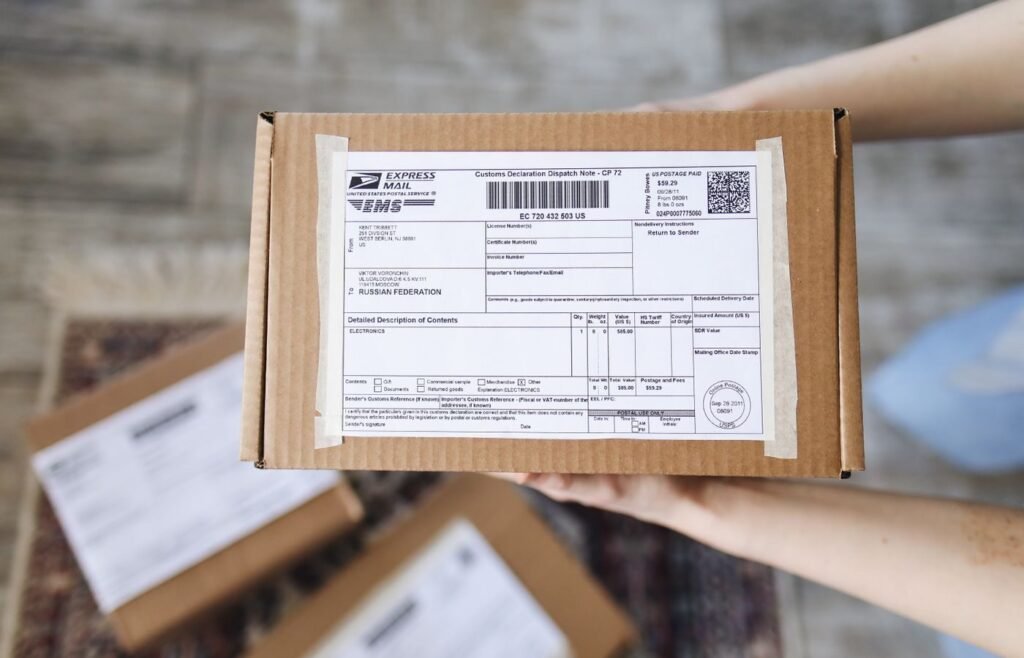
The line on a customs declaration decides the duty rate. It is a commercial decision, not an admin one.
The stack, in full
Product cost
Your cost of goods
Unchanged
Outbound freight
To the customer, not to the border
Quote against real dimensions and weight
Duty
Set by commodity code and origin
Zero in some trade agreements, significant in others
Import VAT or sales tax
Charged on the landed value, often including freight
Recoverable or not depending on the model you choose
Broker and handling fees
Per shipment, sometimes per line
Punishes low-value parcels hardest
Returns
Outbound cost, inbound cost, and unsellable units
The line most often left out entirely
Model this per product per market. The answer routinely differs between two items in the same range.
KEY TAKEAWAY
Delivered duty unpaid is the single most reliable way to lose an international customer. If the carrier asks for money at the door, you have not sold them anything; you have sent them a problem.
Three decisions that follow
- Charge duty and tax at checkout, or absorb it. Both work. Surprising the customer does not. Pick one and say so plainly on the product page.
- Classify your catalogue properly. Commodity codes decide the duty rate and getting them wrong is both a margin error and a compliance risk. This is a one-off piece of work on the top of the range.
- Check the low-value threshold in each market and whether it still applies. Several have changed in recent years, and a model built on an old threshold quietly stops working.
Nothing in this chapter is tax advice, and rates and thresholds change. The point is that these lines belong in the model before launch rather than in a surprise reconciliation afterwards — and that somebody qualified should check the specifics for the markets you pick.
CHAPTER 04
5 min
Choosing the operating model
Four models, not a spectrum. Pick the cheapest that can prove the market, and set the trigger for moving up in advance.
There are four ways to sell into a market and they are not points on a spectrum. Each has a different margin, a different setup cost and a different level of commitment, and the most common expensive mistake is drifting between two of them without deciding.
Model
What it is
Best when
Cross-border from home
Ship from your existing warehouse, customer imports
Testing a market, high-value low-weight products
Marketplace
Sell on a platform already operating there
Demand exists on the platform and you want speed over control
Local stock, no entity
Stock held in-market via a 3PL, still your home company
Volume justifies faster delivery but not a subsidiary
Local entity
Registered company, local everything
The market is material and long term
Each step up buys delivery speed and conversion, and costs setup, compliance and commitment. Move up when volume forces it, not before.
KEY TAKEAWAY
Start at the cheapest model that can prove the market, and set the volume trigger for moving up before you launch. Deciding under pressure after a good quarter is how businesses end up with an entity they do not need.
What changes at each step
- Delivery time, which is the largest single conversion input in most markets — often larger than price.
- Returns friction. A local returns address changes return rates, conversion and support load all at once.
- Tax treatment. Where tax is collected and whether it is recoverable changes materially between models, and it is worth taking advice on before committing.
- Working capital. Local stock means paying for inventory twice before selling it once.
- Accountability. Every model needs an owner; the local entity needs one who is awake in that timezone.
Marketplaces deserve a specific note: they are the fastest way into a market and the least likely to build anything you own. That is a fine trade for a test and a poor one for a long-term position. The marketplace selling guide covers what running one properly asks of you.
CHAPTER 05
5 min
Site architecture, hreflang and currency
One of the few genuinely hard-to-reverse decisions. Settle it before the first market launches.
The URL model for international is one of the few decisions that is genuinely hard to reverse. Get it wrong and you spend the following year either migrating or explaining why two versions of the same page compete with each other in search.
Three structures, and what each costs
Structure
Strength
Cost
Subdirectories
One domain accumulating authority; cheapest to run
Weaker local signal; one platform has to serve every market
Subdomains
Cleaner separation, easier to host separately
Authority is shared less readily than on subdirectories
Country domains
Strongest local trust signal, especially offline
Each domain starts from nothing and needs its own authority
For most businesses under a handful of markets, subdirectories are the defensible default. Country domains earn their cost when the market is material and local trust matters commercially.
KEY TAKEAWAY
Settle the URL and hreflang model before the first market launches. Retrofitting it across a live catalogue is one of the most expensive pieces of technical work in eCommerce.
The technical set that has to be right
- Hreflang annotations that reciprocate. Every version points at every other version including itself, or the whole set is ignored.
- A self-referencing canonical per version. Canonicalising a market page to the home-market page tells search engines the local page should not exist.
- An x-default for the fallback, so visitors from unmapped countries land somewhere sensible.
- No automatic redirect based on IP. It breaks crawling and infuriates travellers. Suggest the local version; let the person choose.
- Currency and language decoupled. A customer in Belgium may want euros in French, Dutch or English, and forcing the pair loses orders.
The broader organic work — category architecture, indexation and content depth in each language — is the same discipline covered in our eCommerce SEO guide. International adds the URL model on top; it does not replace any of it.
CHAPTER 06
4 min
Localisation beyond translation
Payment methods, delivery expectations, sizing conventions and returns law decide conversion far more than the words do.
Translation is the part of localisation that gets budgeted and the part that matters least. A perfectly translated store with the wrong payment methods, an unfamiliar delivery promise and sizes nobody recognises will convert badly in flawless local grammar.
What actually moves conversion in a new market
- Payment methods people actually use. Card share varies enormously by country, and the locally dominant method is frequently not a card at all. This is usually the single largest conversion lever in a new market.
- A delivery promise in local terms. A date beats a duration, and the expected standard differs sharply between markets.
- Returns that feel local. A domestic returns address, and terms that at least meet local consumer law, which in several regions is stricter than yours.
- Sizing and units in local convention. Centimetres or inches, local size charts, local voltage and plug types. Getting this wrong shows up as a returns cost.
- Prices that look right. Rounded local prices, correct currency formatting, and tax shown the way that market expects — inclusive in some, exclusive in others.
- Support in the language, or a clearly stated policy about which language you support and when.
KEY TAKEAWAY
If you only do one thing in a new market, add the locally dominant payment method. It reliably outperforms every other localisation change we have measured.
Translation, done properly
1
Translate the commercially important pages with a human. Category pages, top products, delivery, returns and checkout. That is a small, affordable set.
2
Machine-translate the long tail if you must, but mark it, and never leave a machine translation on a page that has to close a sale.
3
Research keywords in the target language rather than translating your own. Direct translations of category terms are frequently not what local buyers search.
4
Have a native speaker review the checkout and the returns policy, which is where a clumsy phrase costs the most.
CHAPTER 07
4 min
Logistics, returns and after-sales
Where the plan meets a parcel. Returns are a line in the business case, not an afterthought.
Everything earlier in this guide converts into a parcel that has to cross a border, arrive when you said it would, and sometimes come back. Logistics is where international plans meet reality, and where the margin modelled in chapter three is either confirmed or quietly lost.

The promise on the product page is a logistics decision. Make it one you can keep at the cost you modelled.
Getting it there
- Quote against real parcel dimensions, not product weight. Volumetric weight decides the price on most international services and it is where quotes go wrong.
- Compare delivered cost, not carriage. Handling, fuel, remote-area surcharges and customs brokerage all belong in the comparison.
- Check tracking quality in-market. A cheap service with poor final-mile tracking generates support tickets that cost more than the saving.
- Hold a second carrier. Cross-border single-carrier dependence is how a peak season goes wrong.
KEY TAKEAWAY
Returns are not an afterthought in international; they are a line in the business case. A cross-border return frequently costs more than the margin on the original order.
Getting it back
1
Decide the returns policy per market before launch, including who pays and where it goes. In several regions the minimum is set by consumer law rather than by you.
2
Provide a local returns address once volume justifies it. It improves conversion and reduces the cost of each return.
3
Work out what to do with returned stock. Shipping it home often costs more than it is worth; local liquidation or refurbishment is usually the answer.
4
Reduce returns at source. Sizing guides, better imagery and accurate specifications are cheaper than any reverse logistics contract.
After-sales matters more here than at home, because a customer with a problem in another country has fewer ways to reach you and more reasons to assume they will not be helped. Publish the support hours and the language, and meet them.
CHAPTER 08
4 min
Measuring a market honestly
Four views and a stop rule agreed before launch. Closing a market cleanly is a legitimate outcome.
A new market reports badly for longer than anybody expects, and the temptation is either to cut it too early or to defend it too long. Both are avoidable with a small number of views and a stop rule agreed before launch rather than argued about afterwards.
The four views worth building
View
Question it answers
Cadence
Contribution per market after landed cost
Is this market making money?
Monthly
Return rate by market
Is the product landing as expected?
Monthly
Delivery performance against the promise
Are we keeping the thing that sells?
Weekly at first
Repeat rate by market cohort
Is this a market or a one-off flurry?
Quarterly
Report markets separately from the start. A market folded into group revenue is a market nobody can evaluate.
KEY TAKEAWAY
Judge a new market on contribution after landed cost and on repeat rate, not on revenue. Cross-border revenue with a 30% return rate and negative contribution is an expensive way to look like you are growing.
What to expect, and when
- Months one to three: operational problems surface, delivery performance is worse than quoted, revenue is small. Normal, and not a signal.
- Months four to six: return rate stabilises and contribution becomes readable. This is the first honest read.
- Months six to twelve: repeat behaviour appears. A market with poor repeat rates is a market you are renting, not building.
- At the stop rule: decide. Closing a market cleanly is a legitimate outcome and considerably cheaper than defending it for another year.
EXPERT VIEW
“The best expansion decision we have been part of was a closure. Six months of honest reporting showed the market could not clear landed cost at any realistic price, and the budget went to the home market instead. That is the system working.”
Dazzle Commerce · International team
- Worked examples
Three decisions, before and after
The three arguments that come up on almost every expansion we are brought into.
MARKET CHOICE
Picking the biggest market first
Before
Largest addressable market chosen on size alone
After
Smaller neighbouring market chosen on landed cost and transit time
The larger market could not be served inside a week at a price the margin supported. The smaller one could, and it reached positive contribution in month four.
DUTY
Shipping delivered duty unpaid
Before
Duty and import tax collected by the carrier at the door
After
Landed cost calculated and charged at checkout, stated on the product page
Refused deliveries and chargebacks were costing more than the duty. Customers do not object to paying; they object to being surprised by a stranger at their door.
SITE STRUCTURE
Duplicating the store on a new domain
Before
Second country on its own domain, same English content, no hreflang
After
Subdirectory per market with reciprocal hreflang and self-referencing canonicals
Two copies of the same catalogue competed with each other and neither ranked. Consolidating recovered the authority and made the second market findable.
Anonymised from expansions we have run. The shapes recur; the specifics depend on your product and markets.
- Take these with you
Three checklists
Written to be worked through rather than read. Nothing here needs a tool you do not already have.
Before you choose a market
A day with a spreadsheet and two carrier quotes.
- Domestic margin, operations and cash tested against the five readiness questions
- Candidate markets scored on the same six criteria
- Landed cost modelled per product for the top two candidates
- Duty rates and low-value thresholds checked, not assumed
- Locally dominant payment methods identified
- A named owner and a written stop rule agreed
Before the first market goes live
The decisions that are expensive to reverse.
- URL structure chosen: subdirectory, subdomain or country domain
- Hreflang reciprocal across every version, including self
- Self-referencing canonical on each market version
- x-default set for unmapped countries
- No automatic IP redirect; a suggestion banner instead
- Currency and language selectable independently
Before the first parcel ships
Fifteen minutes that prevents a month of tickets.
- Commodity codes assigned across the range you are listing
- Duty and tax charged at checkout, or absorbed and stated
- Delivery promise given as a date and achievable by the carrier quoted
- Returns policy written per market, meeting local law
- Returns address and disposition decided for returned stock
- Support language and hours published on the site
Copy these into your own tracker. There is no download form and no email wall.
- Frameworks
Two frameworks worth keeping
The two decisions that get reargued every quarter, written down so they stop being reargued.
FRAMEWORK ONE
The model escalation ladder
Each rung buys delivery speed and conversion, and costs setup, compliance and commitment. Set the volume trigger for climbing before you launch, so the decision is made when everybody is calm rather than after one good quarter.
Rung
Climb when
What it costs
Cross-border from home
Starting point for almost every test
Slow delivery, duty friction, weak local signal
Marketplace in-market
Demand clearly sits on the platform
Fees and the customer relationship
Local stock via 3PL
Delivery time is demonstrably costing conversion
Working capital and forecasting difficulty
Local entity
The market is material and long term
Compliance, accounting and management attention
Skipping rungs is occasionally right and always expensive. Climbing without a trigger is how businesses acquire a subsidiary they cannot staff.
Tax treatment differs at every rung. Take advice for the specific market before climbing rather than after.
FRAMEWORK TWO
The expansion priority order
When a market needs everything doing, the order matters more than the list. Each step assumes the one above it has cleared, because translating at step six is wasted while step one is wrong.
1
Readiness. Domestic margin, operations, catalogue data and cash. Expansion multiplies whatever is already fragile.
2
Market selection. Scored on the same six criteria, weighted for deliverability and duty rather than size.
3
Landed cost. Modelled per product per market, including returns. This decides whether anything below is worth doing.
4
Operating model. One per market, chosen deliberately, with a written trigger for moving up.
5
Site architecture. URL model, hreflang and canonicals settled before launch, not retrofitted.
6
Localisation. Payment methods first, then delivery promise, returns, sizing and finally words.
7
Demand. Paid and organic, once a customer in that market can actually buy without friction.
Most expansions we are asked to rescue started at step seven, with a translated site and an advertising budget.
- In summary
Key takeaways
Eight sentences you could hand to somebody who is not going to read the guide.
1
Expansion multiplies existing weakness. Test readiness on margin, operations, catalogue data, cash and ownership before choosing anywhere.
2
Score candidate markets on the same six criteria, and weight deliverability and duty above market size.
3
Model landed cost per product per market across six lines, including returns. It is the number that decides everything else.
4
Never ship delivered duty unpaid. Customers do not object to paying; they object to being surprised by a carrier at the door.
5
Pick one operating model per market and set the volume trigger for moving up before launch.
6
Settle the URL model, hreflang and canonicals before the first market goes live. Retrofitting it is among the most expensive technical work in eCommerce.
7
Localisation is payment methods, delivery promise, returns and sizing. Translation is the last and least of it.
8
Report markets separately on contribution after landed cost and on repeat rate, and honour the stop rule you wrote at the start.
If you want a single first action: take your best-selling product and model what it costs to deliver to a customer in your top candidate market, including duty, tax and one return.
- Go deeper
Where this work sits in the practice
Three services that pick up the chapters above.
Market selection, landed cost modelling, operating model and localisation run as one programme.
The markets we work in, with what changes commercially and operationally in each one.
The URL model, hreflang, currency and payment integration work chapter five depends on.
- Keep reading
Related guides
The rest of the guide library, all published in full.

Complete guide · 38 min
The fastest way into a new market, and what running a marketplace properly asks of you.

Complete guide · 38 min
The organic work the URL model in chapter five sits on top of, in every language.

Complete guide · 37 min
Where a new market sits in the order of work, and when it is the wrong next move.
Want this run on your business rather than read about it?
Our expansion engagements open by modelling landed cost per market, then choosing the operating model before anything is translated.