
International Expansion Template
Most international expansion goes wrong at the choice of market, not at the execution. A market with an eight per cent contribution margin needs a 12.5x return on ad spend to break even, which no acquisition channel will deliver — and no amount of enthusiasm about demand changes that arithmetic. This scorecard runs it before you commit.
FORMAT
XLSX
CONTAINS
4 tabs
LAST UPDATED
September 2026
LICENCE
Free, unrestricted
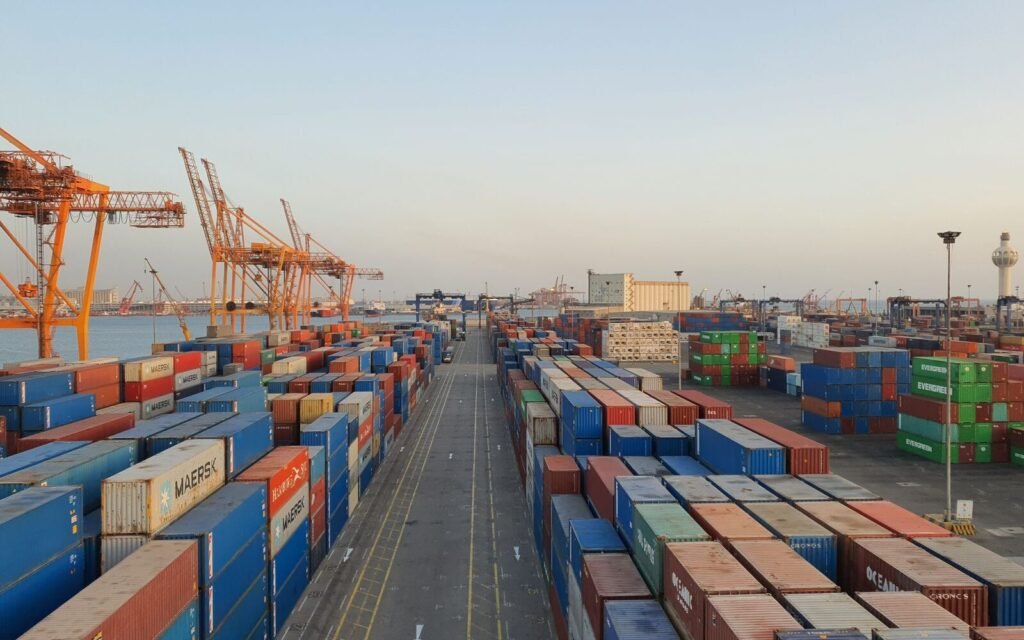
The market with the most demand is rarely the market with the best landed margin.
- Why this one
Demand picks the market. Margin decides whether it works.
The two rarely point at the same country, and the tension between them is the actual decision.

A market is not viable because it is large. It is viable because an order from it leaves money behind.
The usual sequence is that somebody notices unsolicited orders from a large market, the demand looks obvious, and the launch plan starts. Six months later the market is running at a contribution margin nobody modelled, because delivery, duty, payment fees and a return rate double the domestic one were each reasonable on their own and devastating together.
So the sheet has two halves that can disagree. Six weighted criteria produce a score out of five. Eleven cost inputs produce contribution per order and the break-even ROAS the market can actually support. The verdict column reads both, and a market with strong demand and thin margin comes out as Investigate rather than Shortlist.
- Six criteria, weighted before you look at any market
- Contribution per order with returns and duty taken out
- Break-even ROAS per market, from that margin
- A verdict of Shortlist, Investigate, Park or Not viable
- A method tab stating where every number comes from
Set the weights before you look at the markets. Setting them afterwards is how somebody justifies the market they had already chosen.
- The six criteria
What a five looks like, and what a one looks like
Default weights shown. They are a starting point and you should argue with them.
Criterion
Weight
A five looks like
A one looks like
Demand
25%
Search volume, marketplace sales and unsolicited orders you already receive from this market
You are guessing, or the guess rests on one enquiry
Weak competition
15%
Few established sellers in your category, none with a strong local brand
Amazon, a dominant local retailer and three funded challengers
Ease of operating
20%
Existing carrier reach, predictable transit, no customs paperwork
New freight lanes, unpredictable clearance, and a returns address you do not have
Light compliance
15%
No registration at your volume, product rules identical to home
Tax registration, a local entity, labelling changes and a compliance calendar
Payment fit
15%
The methods people expect are ones you already accept
Local wallets, instalments or cash on delivery you cannot support yet
Light localisation
10%
Same language, same conventions, no translation
Full translation, right-to-left layout, local support hours, rewritten product data
A fashion brand should weight returns and localisation far higher. A heavy, low-value product should weight ease of operating above everything, because delivery cost will decide the answer before demand gets a vote.
- What is inside
Four tabs
One scores, one weights, one calculates, one keeps you honest.
Read me
Eight counters, ending with the tension that is the whole decision.
- Markets assessed, and how many are fully scored
- Counts for Shortlist, Investigate, Park and Not viable
- Best weighted score and best contribution margin, which are usually different markets
Markets
Twelve candidate markets across twenty columns, five of them calculated per row.
- Six criteria scored one to five, with a weighted total
- Eleven cost inputs from AOV through to payment fees
- Contribution per order, contribution margin and break-even ROAS
- A verdict that reads both halves rather than just the score
Weights
The six criteria with default weights, a total that checks itself, and a description of what a five and a one look like.
- Weights totalling 100, with a check that says so
- Guidance on when to reweight for your category
- The thresholds behind each verdict, stated plainly
Method
Where each of the eleven cost inputs comes from, the trap under each, and how contribution is calculated.
- Why a rate card average is the wrong delivery number
- What the contribution formula includes and excludes
- Why you should open one market rather than three
The contribution formula excludes return postage and restocking, because those vary enormously by policy. The Method tab says so and tells you how to fold them in.
- How to use it
From a list of countries to one decision
A week of real work, most of it getting delivery and duty numbers that are true.
01
Set the weights before you look at any market
On the Weights tab, in a room, with whoever owns the budget. Weights set after the scoring are weights chosen to justify a market somebody had already picked.
02
List four to eight candidates, no more
Include the market you already receive unsolicited orders from, and at least one you consider too small. The small one frequently wins, because ease of operating carries more weight than people expect.
03
Get a real delivery quote for a real parcel
Not a rate card average. Rate cards exclude fuel, remote-area and customs handling surcharges, and those are what turn a viable market into a marginal one.
04
Ask your accountant about compliance before you score it
Distance-selling thresholds are the part everybody knows about. Labelling, product standards and local representative requirements catch more people and cost more to fix late.
05
Assume a higher return rate than at home
Cross-border returns run higher and cost more per unit. Using your domestic rate is the single most common reason a market model looks better on paper than in the accounts.
06
Read the verdict, then open one market
Not three. Operational load does not add, it compounds, and the second market is usually what makes the first one fail.
Re-run it after six months in your first market. Half the numbers you guessed will have been replaced by numbers you know, and the ranking usually changes.
- Getting it wrong
Six ways expansion decisions go wrong
Five of them happen before anything is launched.
Choosing on demand alone
The largest market is usually the one with the worst landed margin and the strongest incumbents. Demand is one of six criteria here for a reason.
Delivery costed from a rate card
Averages exclude fuel, remote-area and customs handling surcharges. Send three real parcels to three real addresses before you score this.
Domestic return rates applied abroad
Cross-border returns run higher and cost more per unit. In some apparel markets the return rate alone decides whether the market works.
Duty treated as the customer problem
Delivered-duty-unpaid parcels get refused at the door, and a refusal costs you both legs plus the goods sitting in a foreign depot.
Opening three markets at once
Operational load compounds rather than adds. The second market is usually what makes the first one fail.
Translating the site and not the product data
The product page is where the sale happens. A translated homepage above English product specifications converts worse than doing neither.
If the model says a market needs a 12x return on ad spend to break even, that is not a marketing challenge. It is the answer.
DOWNLOAD
Market Selection Scorecard — XLSX
Twelve candidate markets scored on six weighted criteria, with eleven cost inputs producing contribution per order, contribution margin and the break-even ROAS each market can support. A verdict column that reads Shortlist, Investigate, Park or Not viable.
FORMAT
XLSX spreadsheet
TABS
Read me, Markets, Weights, Method
FORMULAS
70, all working
LICENCE
Free, commercial use
No email address, no sign-up and no watermark. Three worked example markets sit at the top of the Markets tab, each labelled, and the spread between them is instructive.
- Questions
Market selection FAQs
What people ask before downloading it.
How is contribution per order calculated?
Kept orders earn AOV minus cost of goods, delivery, duty and payment fees. Returned orders earn nothing and still cost the outbound delivery. It deliberately excludes return postage and restocking because those vary by policy, and it excludes marketing entirely, which is the point of the break-even ROAS column beside it.
What do the verdicts mean?
Shortlist is a weighted score of 3.5 or better with a contribution margin of 20 per cent or better. Park is a score under 2.5 or a margin under 10 per cent. Not viable means contribution per order is negative. Everything else is Investigate, which is the honest answer for most markets most of the time.
Should I change the weights?
Yes, and before you score anything. A fashion brand should weight returns and localisation far higher than a spare-parts business; a heavy, low-value product should weight ease of operating above demand. Changing them afterwards is how a decision gets reverse-engineered.
Why does the score stay blank on some rows?
Because all six criteria have to be filled. A partly scored market would rank against fully scored ones on incomplete information, which is worse than showing nothing.
How many markets should I assess?
Four to eight. Include the market you already get unsolicited orders from, and at least one you think is too small — small markets win more often than people expect, because ease of operating carries real weight.
Is this a launch plan?
No, and deliberately so. It ends with a ranked shortlist. Choosing the wrong market carefully is the expensive mistake, and it is made before any launch work starts. For the launch itself, the launch checklist applies to a new market as much as to a new store.
Does it cover marketplaces as an entry route?
Not directly. Selling into a market via its marketplace is a different decision with a different cost structure, and the marketplace expansion checklist covers it.
Does it work in Google Sheets?
Yes. SUM, COUNT, COUNTA, COUNTIF, MAX and IF behave identically. Upload the XLSX to Drive and open it with Sheets.
- Keep going
Related reading and tools

SERVICE
What running a market looks like once you have chosen it: localisation, logistics, tax and channel mix.

CHECKLIST
Entering a market through its marketplace is a different decision with a different cost structure.

TOOL
The same arithmetic as the last column here, for a single market or a single product line.
Shortlisted a market and want the numbers checked?
A strategy call is an hour spent on whether the landed margin survives contact with real carrier quotes, rather than on whether the opportunity looks big.